Integrative Therapy
I'm an integrative therapist, which means I draw on a wide range of approaches and shape the work around you, rather than fitting you to one model.
Let's talk - Book a free 30-minute callWhat is integrative therapy?
Integrative therapy means I don't work from one single model. I draw on a wide range of theoretical models and frameworks, and shape the work around you, your needs, and the way you experience the world.
The work we do is shaped by the relationship we build. Some of it is simply talking and making sense of things together; some of it uses other approaches when they'd be useful.
Depending on what feels useful for you, our work might include:
Exploring different parts of yourself
Using approaches informed by Internal Family Systems (IFS) to understand the different needs, feelings and motivations that can sometimes pull you in different directions.
Making sense of your past experiences and relationships
Exploring how they've shaped the way you see yourself, relate to others and navigate life today.
Revisiting old messages and beliefs
Drawing on inner child work and re-parenting approaches to explore what you've learned about yourself and begin developing a different relationship with yourself.
Working with emotions and the body
Using somatic approaches, and EFT tapping where it's useful, to explore how you experience emotions physically, and find ways to process and regulate them.
Guided visualisations
Creating space for reflection, new perspectives and deepening your connection with yourself.
Finding practical ways to make life easier
Exploring executive functioning strategies and accommodations that work with your needs and the way you naturally do things, rather than against them.
There's no expectation that we'll use all of these approaches. We'll work out what feels right for you together.
EFT (Tapping): one of the approaches I use
EFT, or Emotional Freedom Technique, is often known as tapping.
In simple terms, EFT involves you tapping with your fingertips on a sequence of acupressure-like points around your own face, head, and top half of your body in a specific way whilst engaging in talking therapy. The approach can also then be used in between, and beyond, sessions for self-regulation.
Because EFT works with the body as well as the mind, it's a gentle way to process and heal what's held from the past, so it's not just understood but released.
What EFT can help with
EFT can be used gently, alongside talking, as part of our work together. It may support you with concerns such as:
Stress and anxiety
Relationship difficulties
Fears and worries
Anger and regulating emotions
Low mood
The physical effects of stress, such as tension and difficulty sleeping
Your relationship with food and eating
Difficult past experiences, worked with at a pace that feels safe for you
EFT isn't a substitute for medical care. If you have a physical health concern, please continue to work with your GP or medical team.
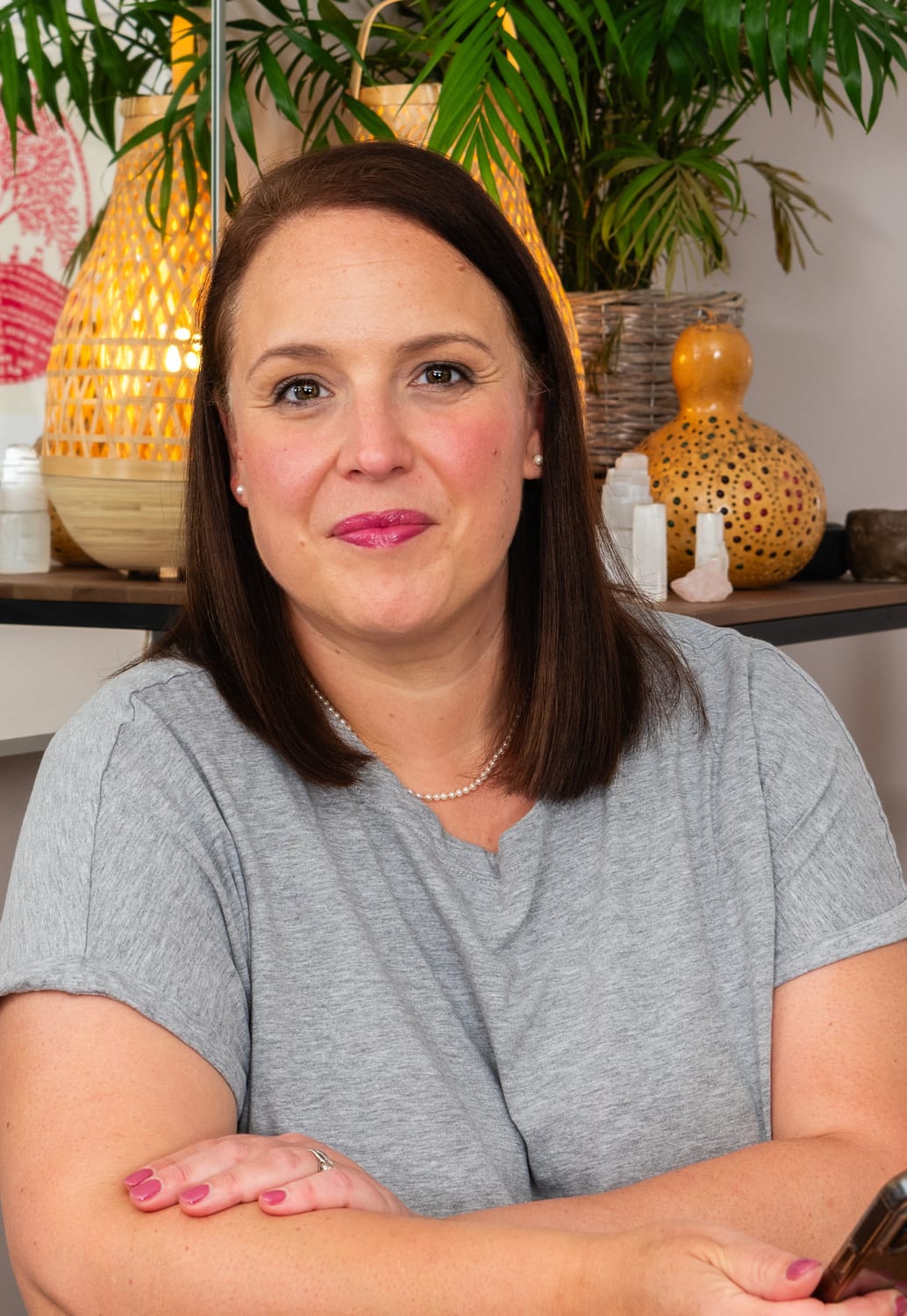
I am affiliated with EFT International, having trained with Ashley Meyer of The Energy Therapy Centre.
I use these techniques alongside my existing practice as an Integrative Therapist and Therapeutic ADHD Coach, as well as in standalone EFT sessions.
Please visit the link below for more research and reading on EFT.
EFT science & researchYour questions about EFT
How does EFT fit with talking therapy?
Tapping whilst talking enables the client to remain in connection with their emotions and feelings whilst processing their experiences. The practitioner will use talking techniques to facilitate the session in connection with the client. Many people find that EFT can reduce the intensity of feelings, so that issues can be worked with in a way that feels less distressing.
Do I have to talk about everything that happened?
In simple terms, no. EFT is different to many other forms of therapy in that you don't have to talk about, re-live, or visualise difficult memories or experiences to be effective. During EFT work we will agree together on what to work on and you are in control at all times over what you share, what you focus on, and the pace of the work. You can be as private as you need to be and still work effectively. You don't have to be able to find the words to describe what you're feeling or what you've experienced.
Do I have to tap? What if it feels awkward?
We can find a way that feels right for you and we'll always tap along together. There are many ways to find a way to make it comfortable for you including modifying the points you tap on. Tapping is always optional. We can start with a short round and see how it feels. It's something that we very much do together and the words and tapping will be discussed and agreed as we go along.
What if nothing changes when I tap?
Then we'll notice that together and adjust. Sometimes tapping can be effective surprisingly quickly and other times it can take longer to feel the benefits. EFT is one tool among many, not the whole of the work, so we can change direction if it isn't right for you. As with all therapy, the journey is yours and just as much, if not more, of the process will go on for you in between and beyond our sessions.
Is an EFT-focused appointment mainly tapping?
We'll begin by talking about what's brought you here and agree on where to focus our work together. Tapping is the main approach we'll explore, with room to talk before, throughout and afterwards. If you book a standalone session, we can work with one concern and then decide together where to go next with our work.
Integrative therapy session
60-minute sessions drawing on a wide range of approaches, which may include EFT, shaped around you and what you bring.
per 60-minute session
Or book a free 30-minute meeting first.
Standalone EFT session
60-minute sessions focused on EFT, where we'll agree together what to focus on and use tapping alongside talking to work with it.
£75 per 60-minute session
Introductory price while I build EFT into my practice.
Or book a free 30-minute meeting first.
Curious about working together?
If you'd like to find out whether this way of working could be useful for you, I'd love to have a conversation.
Let's talk